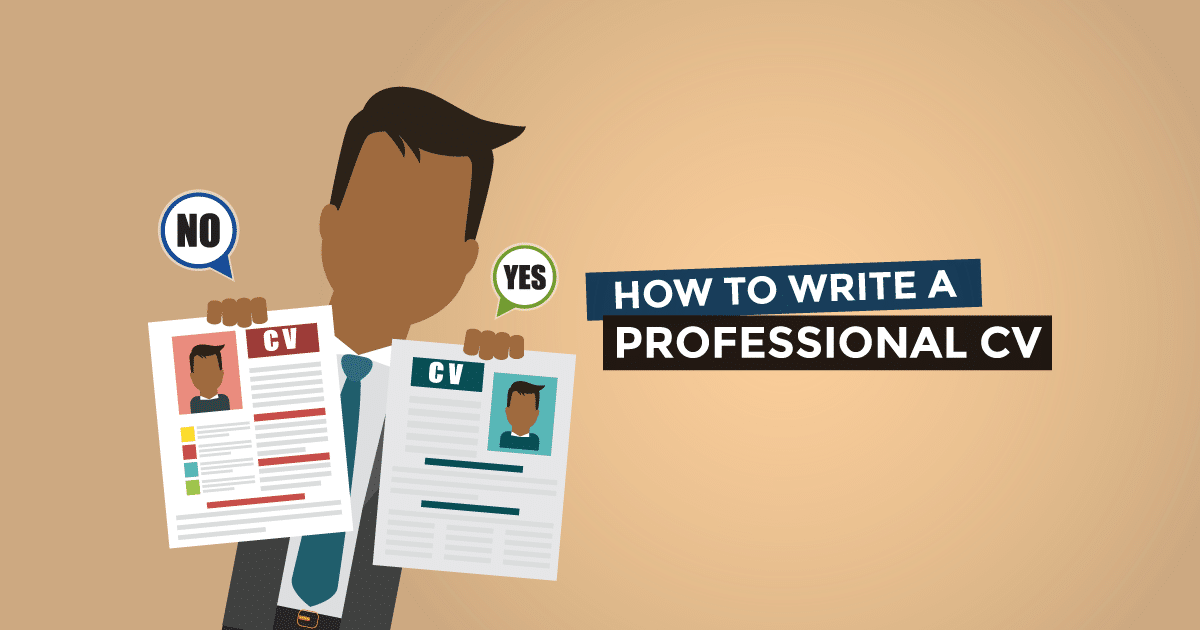
Learn how to write a CV in Nigeria that gets interviews. From CV formats to examples and pro tips, here’s how to stand out in a competitive job market.
How do you write a CV in Nigeria that gets you an interview? For most job seekers, writing a CV that actually lands an interview is challenging. Recruiters receive hundreds of applications daily, so your CV must stand out by highlighting your unique selling points — not just listing qualifications. The ultimate rule is simple: be different, be clear, and show what makes you the right fit.
There is no single “perfect” CV format in Nigeria, but every strong CV must spotlight your suitability for the role you’re applying for. A well-written CV tells the recruiter, at a glance, why you deserve an interview. The key is tailoring your CV format and content to the specific job — instead of relying on a one-size-fits-all approach.
Today’s Nigerian job market is more competitive than ever. Employers expect candidates to show strong CV writing skills, relevant qualifications, and attention to detail. With remote hiring on the rise, recruiters pay closer attention to formatting, keywords, and professionalism. While the process may feel tougher, the good news is this: with the right CV format and strategy, you can overcome these hurdles and secure more interviews.
Table of Contents
What is a CV in Nigeria?
Your CV (Curriculum Vitae) is the very first impression a recruiter or hiring manager will have of you. Before you ever get invited for an interview, your CV decides whether you’re shortlisted or overlooked. In Nigeria’s competitive job market, knowing how to write a CV that gets interviews is one of the most important skills any job seeker can learn.
A Curriculum Vitae (CV) is a concise summary of your education, work experience, skills, and achievements used for job applications. In Nigeria, employers often request a CV as the first screening tool, so the format, clarity, and relevance of your CV can determine your chances of getting hired.
There are two main types of CV formats in Nigeria:
Educational CV – Best for fresh graduates or candidates with little work experience. It emphasizes academic qualifications, certifications, and relevant training.
Experience-based CV – Focuses on professional achievements, skills, and career history. This format works best for experienced professionals.
Always start with your most recent qualifications or job roles and tailor your CV to the industry and role you’re applying for.
Listing either educational or professional experience is best done by starting with them from most recent to oldest. It’s Important to always adapt your CV to a job industry and consistently tweak them for advertised job roles.
The CV Writing Format
1. Personal Details
This section should include your full name, phone number, professional email, and location (city/state). Avoid outdated details like religion, state of origin, or multiple phone numbers unless specifically requested in the job posting.
Grew monthly revenue from ₦15M to ₦25M within 6 months
Expanded product reach across 6 states in one year
Won “Salesman of the Year” twice
Pro Tip: Tailor your work experience to each job description. Employers are more likely to shortlist candidates whose CVs mirror the role requirements.
3. Education & Certifications
Begin with your highest qualification first. Include degree, institution, year of graduation, and key highlights. Add professional certifications if they strengthen your application.
Example: University of Port Harcourt – B.A. History & International Relations (2013)
Graduated First Class (CGPA 4.56), Best Graduating Student
Fluent in French, Portuguese, and Chinese
Pro Tip: Only include primary/secondary school if you’re a fresh graduate without higher education.
4. Interests and Abilities
Keep this section short and specific. Avoid generic terms like “team player” or “hardworking.” Instead, show proof of discipline or commitment.
Example: Instead of “running,” write: “I jog 30km every weekend to train for half marathons.”
Pro Tip: Include interests that connect with the company’s values (e.g., CSR initiatives in sustainability, education, or health).
5. References
Most Nigerian employers request two to three referees. Choose referees who know your work and can vouch for your skills. Keep CV length to a maximum of two pages, concise CVs are more effective.
Pro Tip: Only include referees you have informed in advance.
How do I write a CV in Nigeria that gets interviews?
To write a CV in Nigeria, keep it clear, concise, and tailored to each role. Start with personal details, add a strong career summary, highlight relevant work experience (latest first), list education and certifications, then include skills and references. Focus on achievements, not just duties, and use keywords from the job description to pass ATS filters.
What is the best CV format in Nigeria?
The best CV format in Nigeria is reverse chronological, where you list your most recent experience and education first. For fresh graduates, an educational CV format works best, while experienced professionals should use an experience-focused format that emphasizes career achievements and skills.
How long should a CV be in Nigeria?
A CV in Nigeria should be 1–2 pages long. Recruiters prefer concise CVs that highlight the most relevant experience and skills. Only include details that show you are qualified for the role — avoid outdated schooling or irrelevant hobbies.
What makes a good CV stand out to employers in Nigeria?
A good CV stands out by being well-structured, error-free, and tailored to the job. Employers look for relevant experience, measurable achievements, strong skills, and professional presentation. Using action verbs (e.g., “developed,” “increased,” “led”) and quantifying results makes your CV more impactful.
Tips for Writing a Good CV in Nigeria
Use strong action verbs Replace weak descriptions with active words like created, analysed, developed, designed, or led. These show initiative and impact, making your CV more persuasive.
Eliminate spelling and grammar errors Mistakes on your CV suggest carelessness. Always use a spell checker and ask someone else to proofread before sending.
Avoid clichés Words like team player, hardworking, or multitasker don’t prove anything. Instead, back up your skills with real examples — for instance, “led a 5-person team to deliver a project ahead of schedule.”
Tailor your CV to the role Review the job advert, company website, and even recent news about the employer. Align your CV with what the company values most.
Choose the right CV format
Chronological CV: For candidates with steady work experience.
Skills-based CV: For those with career gaps or career changes.
Academic CV: For research or education-focused roles.
Don’t label your CV “Curriculum Vitae” Start with your name as the header — it’s more professional and space-efficient.
Use a professional email address Stick to firstname.lastname@email.com. Avoid informal ones like sweetprincess@… or bossman2020@….
Be truthful Never exaggerate qualifications or experience. Dishonesty can ruin your career prospects and, in cases like falsifying degree results, even carry legal consequences.
Protect your privacy online If you upload your CV to job boards, leave out your full home address to avoid security risks.
Always include a cover letter (unless told otherwise) A tailored cover letter allows you to explain why you’re the right candidate, highlight relevant parts of your CV, or address any gaps in your work history.
What Employers Value Today, According to WEF’s Future of Jobs Report 2025 The World Economic Forum’s latest insights show that forward-thinking employers are looking for candidates with a powerful mixture of digital fluency like AI and data literacy and human-centered strengths such as resilience, creative problem-solving, and leadership. The World Economic Forum’s Future of Jobs Report 2025 makes it clear: employers are no longer hiring just for degrees or past job titles. Instead, they are seeking candidates who blend digital fluency with adaptable human strengths. As industries transform under the pressure of technology, climate change, and shifting demographics, the skills that matter most are those that enable resilience, innovation, and long-term adaptability.
On the technical side, demand is surging for expertise in artificial intelligence, big data, technological literacy, and cybersecurity. Employers want people who can not only navigate today’s tools but also anticipate the digital shifts of tomorrow. At the same time, sustainability and green skills are rising in importance as businesses adapt to environmental and regulatory changes shaping the global economy.
Equally critical, however, are human-centered capabilities: creative thinking, leadership, communication, and lifelong learning. The report highlights resilience, flexibility, and social influence as essential differentiators that help employees thrive amid uncertainty. For job seekers, this means that the most powerful CVs showcase a balance—evidence of technical skills, yes, but also real-life examples of adaptability, collaboration, and problem-solving that employers now value more than ever.
Why Is CV Structure Critical in Nigeria?
Before your CV ever reaches a recruiter’s desk, it usually goes through an Applicant Tracking System (ATS). This software scans hundreds of CVs and filters them based on keywords, relevance, and job-specific requirements. Only the CVs that match the role’s criteria move forward to a human recruiter.
Simply put: you’re writing for both recruiters and machines. That’s where our AI Career Toolcomes in — it helps rewrite your CV into the right structure, with optimized keywords, so it passes ATS filters and gets noticed.
How can I get my CV noticed?
Tailor your CV for every role instead of using one version. Use keywords from the job description. Keep formatting clean and professional. Jobberman Nigeria’s AI Career Tool scustomizes your resume for your desired roles, ensuring it shines in the competitive job market, giving you a higher chance of landing interviews.
What CV writing methods work best in Nigeria?
Chronological CV → Best for steady career growth. Functional CV → Best for gaps or career changes. Combination CV → Great for graduates or career shifters. Not sure which format works for you? The AI Career Tool recommends the right CV format based on your career stage and even rewrites your content into that structure.
How do I optimize my CV with the right keywords?
Manually reading job descriptions and matching keywords can be time-consuming. Instead: Identify repeated terms (skills, tools, responsibilities). Align your achievements with those keywords. The AI Career Tool automates this process, it highlights missing keywords in your CV and suggests tailored improvements so recruiters and ATS systems instantly see your relevance.
What should I remove from my CV?
Recruiters dislike irrelevant details such as outdated schooling, vague hobbies, multiple phone numbers, or “references available on request.” Our AI Career Tool flags outdated or irrelevant details in your CV, helping you trim it down to a powerful 1–2 page document that’s recruiter-ready.
What makes a strong career summary?
A strong summary is short, tailored, and focused on value: who you are, your top skills, and how you can help the employer. If writing this feels hard, the AI Career Tool generates a professional career summary for you — personalized to your experience and aligned with the role you’re applying for.
Get a professional’s touch – Creating a global-standard, interview-winning CV is more complex than most people think. If you don’t have the time or expertise, you don’t need to leave it to chance. You can either work with our professional CV writers, who know how to highlight your skills, achievements, and experience to impress recruiters or use our AI Career Tool, which instantly restructures and optimizes your CV to meet global standards. Whether you prefer expert human guidance or AI-powered support, we’ve got you covered.
At Jobberman Nigeria, our team of expert CV writers and affordable ai career tool is ready to give your CV the attention it deserves — transforming it into a powerful tool that opens doors to new opportunities.. You can learn more about this service by visiting this link .