Many people use the terms “career” and “job” interchangeably, but they are not the same thing. While both involve work and earning an income, the mindset, opportunities, and outcomes they create are very different.
Understanding the difference between a job and a career can change how you approach your professional life, shape your long-term goals, and help you make smarter choices for growth and fulfilment.
This article breaks down what a job is, what a career is, their key differences, real-life examples, and how to decide which one you’re pursuing.
A job is work you do to earn money. It may be full-time, part-time, or temporary, and the main focus is usually the paycheck rather than long-term growth. Jobs often:
Require fewer qualifications or specialised skills.
Provide immediate income but limited progression.
May not align with your long-term goals.
Examples of jobs include: cashier, delivery driver, waiter, receptionist, or store clerk. These roles are important and provide valuable experience, but they are typically short-term commitments rather than long-term career paths.
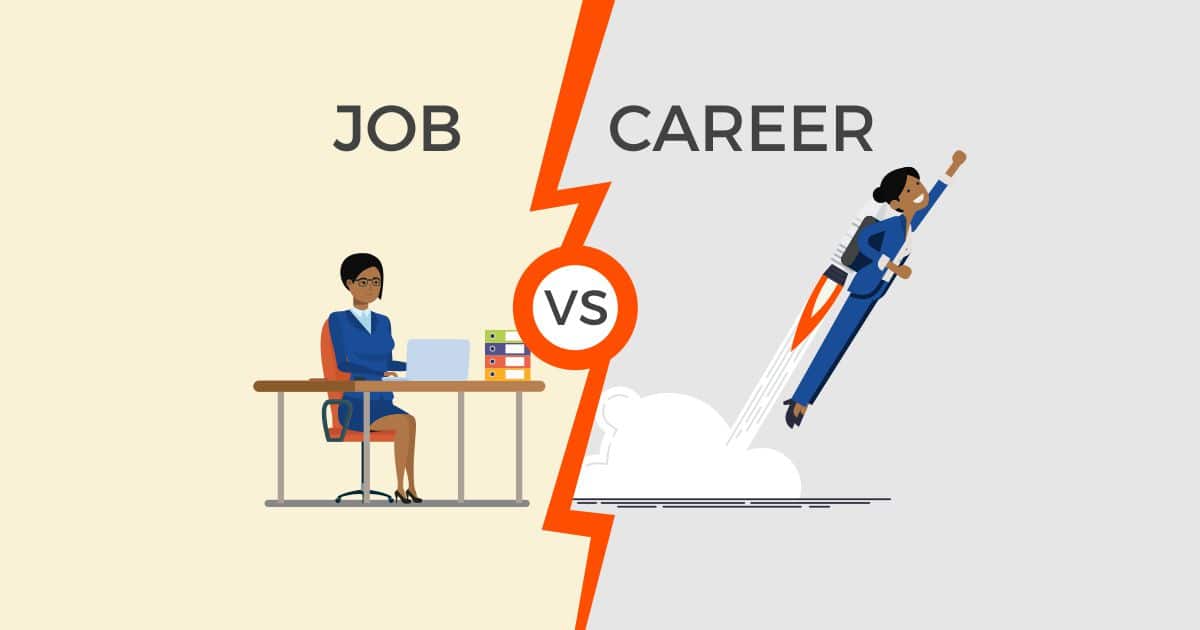
Think of a job as something you “do” — often to meet financial needs in the moment.
Table of Contents
What Is a Career? (Definition + Examples)
What Is a Job? (Definition + Examples)
A career is a long-term pursuit of professional growth in a chosen field. It usually spans years, sometimes decades, and involves building skills, gaining recognition, and advancing into higher positions. Careers often:
Align with your passions, strengths, or long-term goals.
Involve continuous learning, certifications, and development.
Offer progression, recognition, and fulfilment beyond salary.
Examples of careers include: medicine (doctor, nurse), engineering, law, teaching, marketing, or IT. Careers can start with entry-level roles but evolve over time into senior or leadership positions.
Think of a career as something you “build” — it’s a journey, not just a paycheck.
Key Differences Between Job vs Career
Here’s a quick comparison:
Aspect
Job
Career
Definition
Short-term work for income
Long-term professional journey
Focus
Earning a paycheck
Growth, fulfilment, and development
Training
Minimal, role-specific
Ongoing training and upskilling
Duration
Short-term or temporary
Lifelong or long-term pursuit
Fulfilment
Limited
Higher personal and professional fulfilment
Example
Cashier at a store
Career in retail management
While both provide income, a career is about progress and purpose, while a job is about meeting immediate needs.
Career vs Job: Which One Is Right for You?
Neither is inherently “better” — the right choice depends on your current stage of life and goals.
Jobs are useful when you need immediate income, are still exploring your options, or are in-between career moves.
Careers are ideal if you want long-term growth, recognition, and fulfilment in a specific field.
Sometimes, a job can become the foundation of a career. For example, working as a sales associate might start as a job, but with skill development and consistent growth, it can turn into a career in sales management or business development.
Why a Career Provides More Fulfilment than a Job?
Professional Growth → Careers give you access to promotions, certifications, and leadership opportunities, while jobs often have limited upward mobility.
Fulfilment → Careers align with your passions, helping you feel more satisfied with your work.
Recognition & Rewards → Awards, promotions, and professional achievements are more common in careers than jobs.
Long-Term Stability → Careers often provide better financial growth, stability, and personal satisfaction.
People in careers often feel excited about Mondays because their work aligns with their goals. In contrast, people in jobs may only look forward to payday.
Can a Job Turn Into a Career?
Yes. Many successful professionals started with small jobs that evolved into lifelong careers. The difference lies in:
Your mindset (seeing each role as a stepping stone).
Your willingness to learn and grow.
Your long-term commitment to building expertise in a field.
Example: A part-time tutor (job) who invests in training and builds experience could eventually become a teacher or education consultant (career).
FAQs About Career vs Job
What is the difference between a job and a career?
A job is short-term work for income, while a career is a long-term pursuit of growth, fulfilment, and development in a chosen field.
Is a career more important than a job?
Neither is “more important.” Jobs provide income and experience, while careers provide long-term fulfilment, stability, and progress.
Can a job turn into a career?
Yes. With passion, training, and long-term commitment, a short-term job can evolve into a career path.
How do I know if I have a job or a career?
If your work feels like a stepping stone toward long-term goals, it’s part of a career. If it’s only about immediate pay, it’s a job.
Understanding the difference between a career and a job is more than just a matter of definition — it’s about shaping how you see your future. A job provides the security of immediate income, but it rarely offers long-term fulfilment or growth. A career, on the other hand, is a journey: it challenges you, develops your skills, and aligns your daily work with your larger goals and passions. This is why people who invest in building careers often report higher satisfaction, resilience, and a stronger sense of purpose in life.
That doesn’t mean jobs are unimportant. In fact, jobs are often the stepping stones that lead us toward careers. They give us valuable experience, financial stability, and a chance to explore what we do or don’t enjoy. But staying in “job mode” forever can leave you feeling stuck, unmotivated, or unfulfilled. Moving toward a career means making intentional choices — investing in training, setting long-term goals, and choosing roles that connect to your strengths and values.
The key is to ask yourself: Am I working only for the next paycheck, or am I building toward something greater? If it’s the former, it may be time to reflect and make changes. Aligning your professional journey with your passions and values transforms work from a burden into a source of meaning, growth, and joy. In the end, a career isn’t just what you do for a living — it’s who you become along the way.